



FoodCoach blog: Spring classics cycling nutrition: how to fuel for the Amstel Gold Race or We Ride Flanderes
Every spring, thousands of amateur cyclists line up to ride the same legendary roads as the professional peloton. Events like the Amstel Gold Race sportive in Valkenburg and We Ride Flanders in Oudenaarde give riders the chance to experience iconic climbs, historic cobbled sections, and the atmosphere of the Spring Classics themselves.
For many cyclists, preparing for these rides becomes a major goal of the season. Yet despite months of preparation, energy levels suddenly drop during the final part of the ride, and the last thirty kilometres feel far harder than expected. Even strong riders who have trained consistently can struggle to maintain their pace when fatigue begins to accumulate. It’s not the fitness. It is your fueling.
Why nutrition determines your performance in long cycling sportives
Spring Classics sportives place serious demands on your body. Riders spend hours maintaining a steady effort while repeatedly climbing steep hills and navigating technical terrain. To sustain that effort, your body relies heavily on energy stored in your muscles and liver. When those energy stores run low, fatigue appears quickly. Power drops, concentration fades, and climbs suddenly feel much steeper than they should.
That’s why nutrition becomes a central performance factor. When you fuel properly before, during, and after training, you maintain stable energy levels, recover faster, and arrive at your next ride ready to perform again. For cyclists preparing for the Amstel Gold Race or We Ride Flanders, small changes in their daily nutrition can make the difference between struggling through the final climbs and finishing the ride strong.
How to fuel for the spring classics: five essential cycling nutrition strategies
1. Know your needs
Every training day places different demands on your body. A long endurance ride requires far more energy than a short recovery spin, and your nutrition should reflect that. Fueling every ride the same way rarely works. Instead, your nutrition needs to match the type, duration, and intensity of your training.
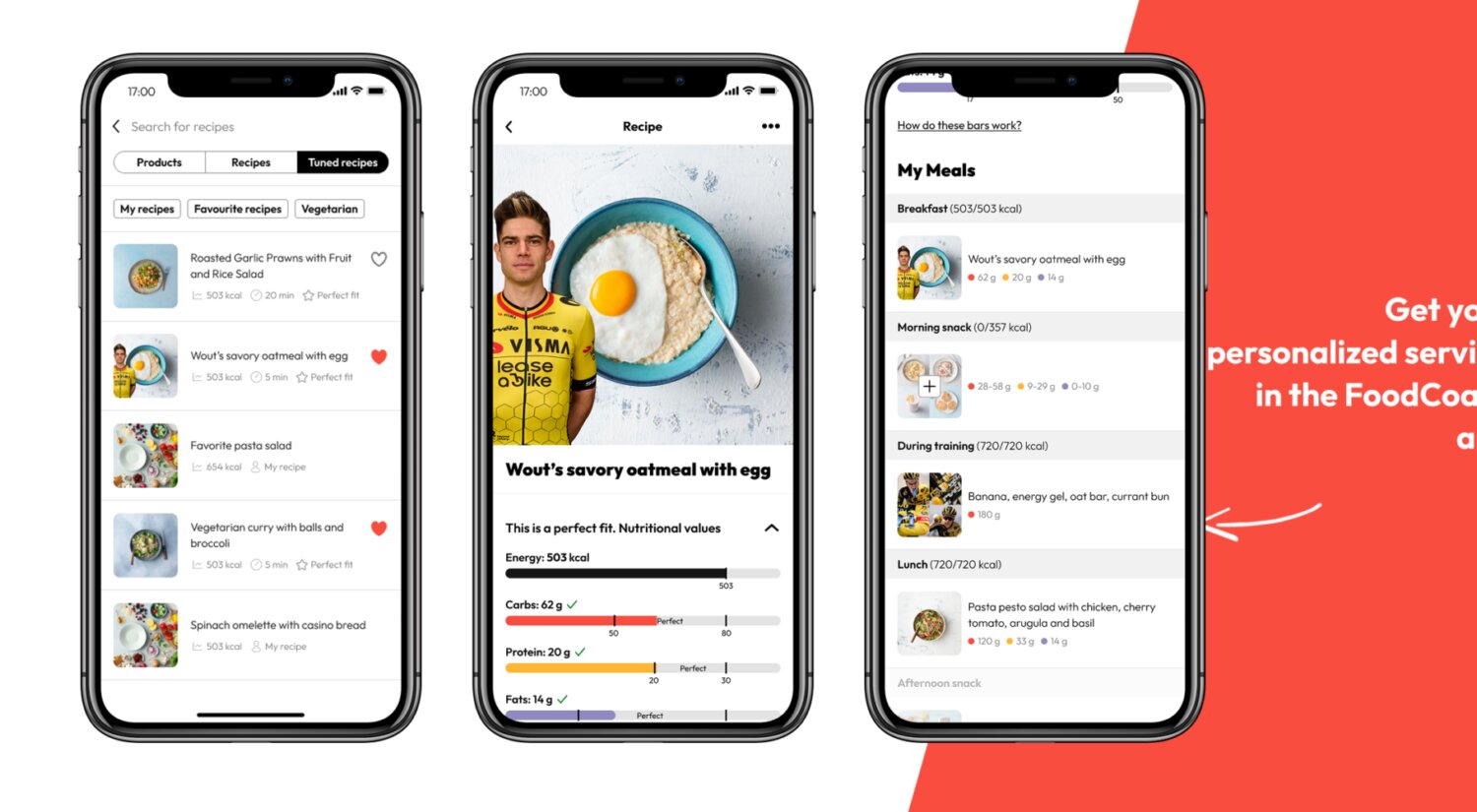
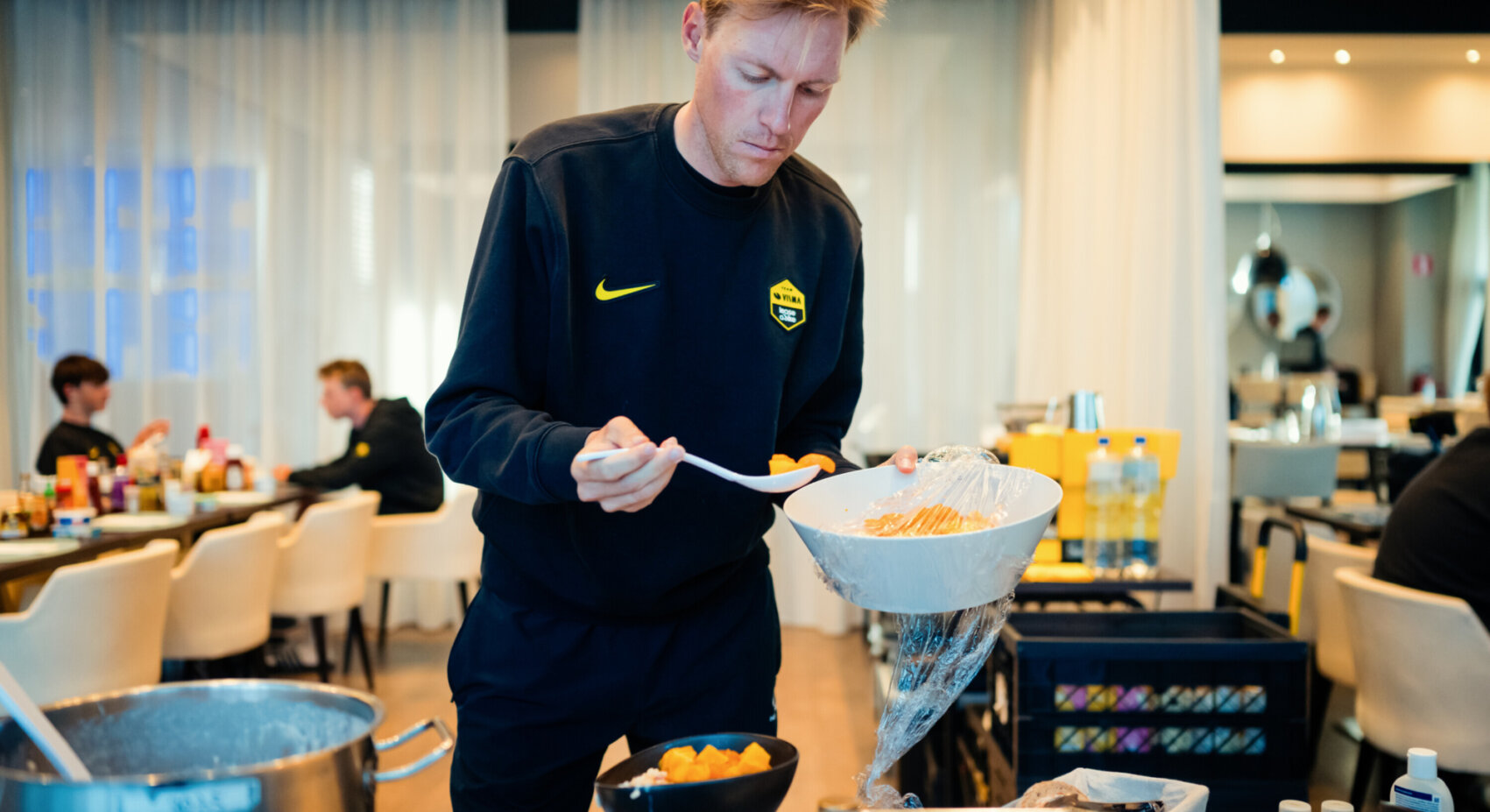
The riders of Team Visma | Lease a Bike adjust nutrition to match the training load of each rider. Amateur cyclists can follow the same principle. With The Athlete’s FoodCoach, riders receive daily nutrition guidance based on their training schedule. The app calculates your personal energy needs and adapts your nutrition plan for rest days, endurance rides, or harder training sessions. This ensures you stay properly fueled throughout your entire preparation period.
2. Recover well after every ride
Recovery starts the moment you step off the bike. After a hard ride, your body immediately begins repairing muscle tissue and replenishing depleted glycogen stores. The nutrition you consume during this period strongly influences how well you recover and how ready you feel for your next session.
Aim to eat a combination of carbohydrates and protein within 30-60 minutes after finishing your ride. Carbohydrates restore glycogen stores, while protein supports muscle repair and training adaptation.
Recovery meals do not need to be complicated. Practical options include:
- Greek yoghurt with granola and fruit
- Smoothies made with oats and milk
- Rice or pasta dishes combined with eggs, chicken, or tofu
Find 1500+ performance proof recipes in the FoodCoach app. Consistent recovery nutrition helps your body adapt to training and reduces the risk of accumulating fatigue over multiple training days.
3. Train your gut to fuel during long rides
Eating while cycling requires practice. Many cyclists experience stomach discomfort during long events simply because they have not practiced fueling while riding. Your digestive system needs time to adapt to processing nutrients during exercise.
Use your longer training rides to practice regular fueling. Consume small amounts of carbohydrates every 20–30 minutes to maintain stable energy levels. As your gut adapts, gradually increase your intake. For longer endurance rides, many cyclists aim for 60–90 grams of carbohydrates per hour, depending on ride duration, intensity, and personal tolerance.
Practicing this strategy during training makes race-day fueling far more comfortable and reliable. Now is also the time to try different foods, gels or bars. Not during race day.
4. Develop a consistent hydration strategy
Hydration plays an important role in endurance performance. Even mild dehydration can reduce power output, increase perceived effort, and affect concentration during long rides. The challenge is that thirst usually appears only after dehydration has already started. Instead of waiting until you feel thirsty, build a structured drinking routine. Many cyclists aim to drink small amounts regularly throughout the ride, typically targeting one bottle per hour, depending on temperature and sweat rate.
Maintaining proper hydration supports temperature regulation, nutrient transport, and cardiovascular function. These are all essential for maintaining performance during long rides.
5. Practice your race-day nutrition strategy
Race day should never be the first time you test your fueling strategy. The weeks leading up to your event provide the perfect opportunity to rehearse your nutrition plan. Test your preferred breakfast before long rides, experiment with carbohydrate intake during sustained efforts, and refine your hydration routine.
These practice sessions help you discover what works best for your body. When race day arrives, your nutrition strategy should feel automatic. Instead of worrying about
what or when to eat, you can focus on pacing, riding smoothly, and enjoying the experience.
Get race ready for your spring classic sportive
Ready to put these nutrition strategies into practice? Start the ‘Get race ready’ focus plan in FoodCoach app to get step-by-step guidance on how small adjustments in your daily meals help you prepare for race day.
Instead of guessing what or when to eat, you receive a personalised nutrition plan that matches your training and daily reality. Because performance on the bike starts with how you fuel your body.