




FoodCoach blog: Smart nutrition strategies to beat cycling fatigue
Scroll through footage of the pros during winter training camp and you will see riders climbing for hours with smooth cadence and controlled breathing, stacking quality sessions day after day. It looks effortless. But behind those steady watts lies something far less visible and far more decisive: precise, smart nutrition. Professional cyclists do not just train hard. They fuel smart, adjusting their intake as carefully as they adjust their training load. And so can you!
If your legs feel heavy, your power numbers are not responding, or your motivation fades halfway through a ride, the explanation is often not the winter blues or lack of fitness. More often, it is a mismatch between workload and fuel.
Why nutrition directly influences cycling fatigue
As the season approaches, training volume increases and intensity sharpens. Intervals become more demanding, endurance rides stretch longer, and recovery windows feel shorter. Yet many cyclists continue eating the same way they did during lighter weeks. The same breakfast before a much harder session. The same lunch after a significantly longer ride. When intake does not matches the intensity, the result is predictable: higher perceived effort, difficulty hitting target power zones, and lingering fatigue that carries into the next day.
Here’s how you can prevent the early season fatigue
1. Recovery nutrition makes or breaks your next ride
Recovery plays an equally decisive role in how your legs feel from one session to the next. Training creates stress and breakdown, but adaptation occurs during recovery. Professional cyclists treat post-ride nutrition as part of the training session itself. Shortly after finishing, they focus on replenishing glycogen stores with carbohydrates, initiating muscle repair with sufficient protein intake, and restoring hydration balance. When recovery nutrition is delayed or inconsistent, fatigue compounds silently across the week. What begins as mild tiredness after one session can evolve into flat, unresponsive legs several days later. Consistent recovery habits create resilience and allow you to maintain quality across your entire training block.
2. Fueling should change with every training day
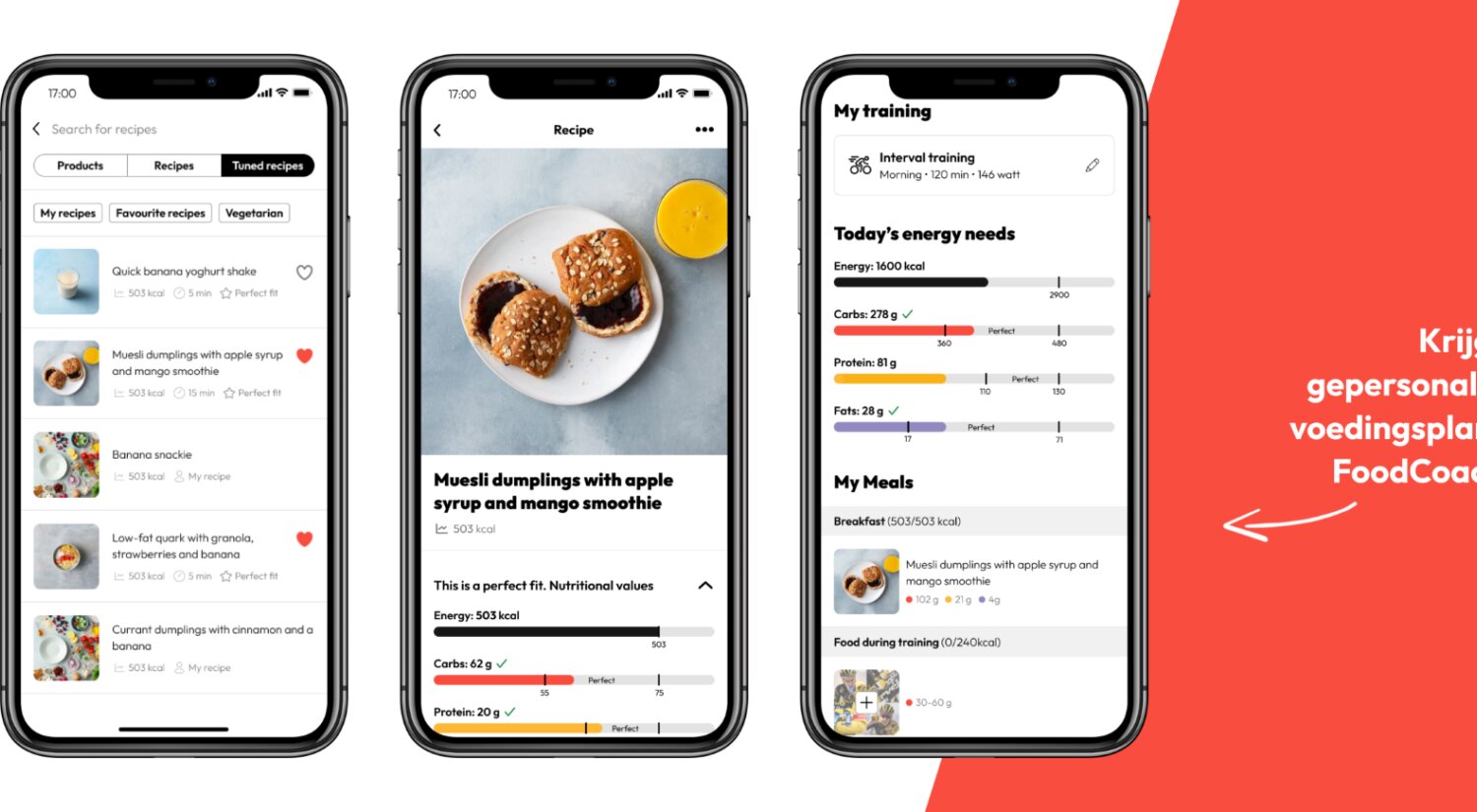
Another common source of cycling fatigue is static eating patterns in a dynamic training schedule. Not every day on the bike demands the same intake. A high intensity interval session places very different physiological demands on the body compared to an easy spin or rest day. Professional teams periodise nutrition in the same way they periodise training, increasing energy and carbohydrate intake on demanding days and adjusting on lighter days. This adaptive approach supports performance when it matters most
while maintaining overall balance. If you are constantly tired, it is worth asking whether your portion sizes and macronutrient distribution truly reflect the type, intensity and duration of your training sessions. Need some help? The FoodCoach app does the work for you. It shows you exactly what your body needs, without having to worry about how much to eat on which training day.
3. Train your gut, not just your legs
Modern cycling requires the ability to tolerate higher carbohydrate intakes during long or intense rides. Many riders hesitate to fuel adequately during training because of previous discomfort or uncertainty about how much to eat. However, the digestive system can be trained just like the cardiovascular system. Professional cyclists regularly practise race-day fueling strategies during training sessions, gradually increasing carbohydrate intake to improve absorption capacity and reduce gastrointestinal distress. By training the gut, they are able to sustain higher power outputs for longer periods without late-ride energy crashes. Avoiding fuel on the bike may feel lighter in the short term, but it often limits performance potential over time.
4. Recognize the early warning signs
Fatigue rarely appears without warning. Subtle signs such as restless sleep, elevated heart rate, increased cravings in the evening, or reduced motivation can indicate that energy availability is insufficient to support training load. In cycling, where consistency is everything, maintaining adequate energy intake is essential not only for performance but also for hormonal balance, immune function and long-term progression. Sustainable improvement does not come from pushing harder in a depleted state. It comes from aligning workload and fuel with precision.
Ready to stop guessing and start fueling smarter?
Whether you are preparing for your first sportive or targeting a competitive season, your nutrition should adapt as dynamically as your training plan. The difference between surviving your training block and thriving in it often comes down to how well you match intake to effort.
Stop guessing. Start aligning your fuel with your workload. Download the FoodCoach app and begin adapting your nutrition to every session, every climb and every goal. Because stronger rides do not start when you clip in. They start with how you fuel the work.