



How a testing day looks like
We test our riders mutiple times a year. Our Head of Performance Mathieu Heijboer explains how a test day works.
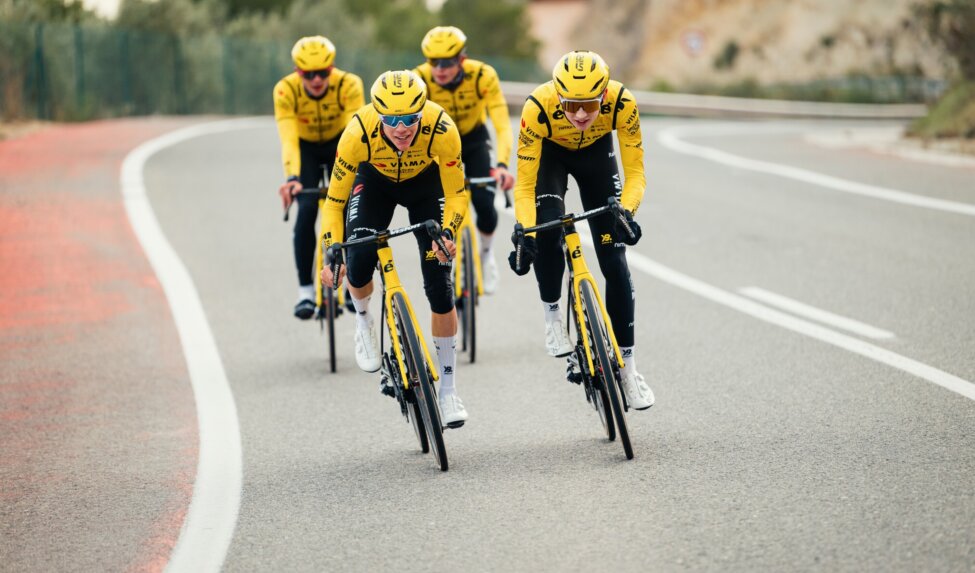
"On one of the last days of our training camp in St. Feliu de Guixols (near Girona), we had our big testing day. Standing with six coaches on the roadside of the St. Grau climb, all 22 riders came up four times and each time we took a few lactate samples. After analyzing all numbers in INSCYD software each rider receives a report of their unique metabolic profile. Our coaches use this report to make new training programs for the next weeks before we test again.
The testing day during the December training camp is always an exciting day. Not only for the riders, but also for the Performance Staff. It's a first benchmark. (Especially we are curious for the new riders, because we don't have historical data of an INSCYD test). We can assess who is already in a good condition and who has still work to do. But more importantly, we can determine if riders' metabolic profiles are matching with the future goals we have in mind. If not, we make adjustments to the training program to accomplish this.
/


This is how a testing day looks like: First thing riders do in the morning is weigh themselves. Then, after breakfast all riders get instructions about the power numbers and duration they should ride at during the test. We divide the group of riders in three separate groups because it is important the coaches have enough time to take proper lactate samples. You don't want five riders queuing and waiting for their sample, especially when it's only 4 degrees Celsius up the mountain. The three groups arrive with about 1h15 (the time it takes to do a complete test) interval time at the bottom of the climb. Then the riders go up four times on different intensities and each time lactate samples are taken at the bottom of the climb and at the point where the coaches are. At the end of each block we take samples until we find the maximum lactate. Riders tell the coaches what the exact time and average power number was they rode at, and all this data is written down together with the lactate.
After 88 intervals (22 x 4) the coaches go back to the hotel and start working behind their laptops, inserting all data in the INSCYD software. At the dinner table, riders receive a report with the results of the test. Later, all coaches have individual talks with the riders to go into more depth about the interpretation of the results and what these results mean for future training. In this way, all riders get personalized training plans, fitting in their season goals."